Songs for a Memorial Slideshow: How to Choose Music That Sounds Like Them
By The Glow Editors · September 26, 2026
Category: remembering-well
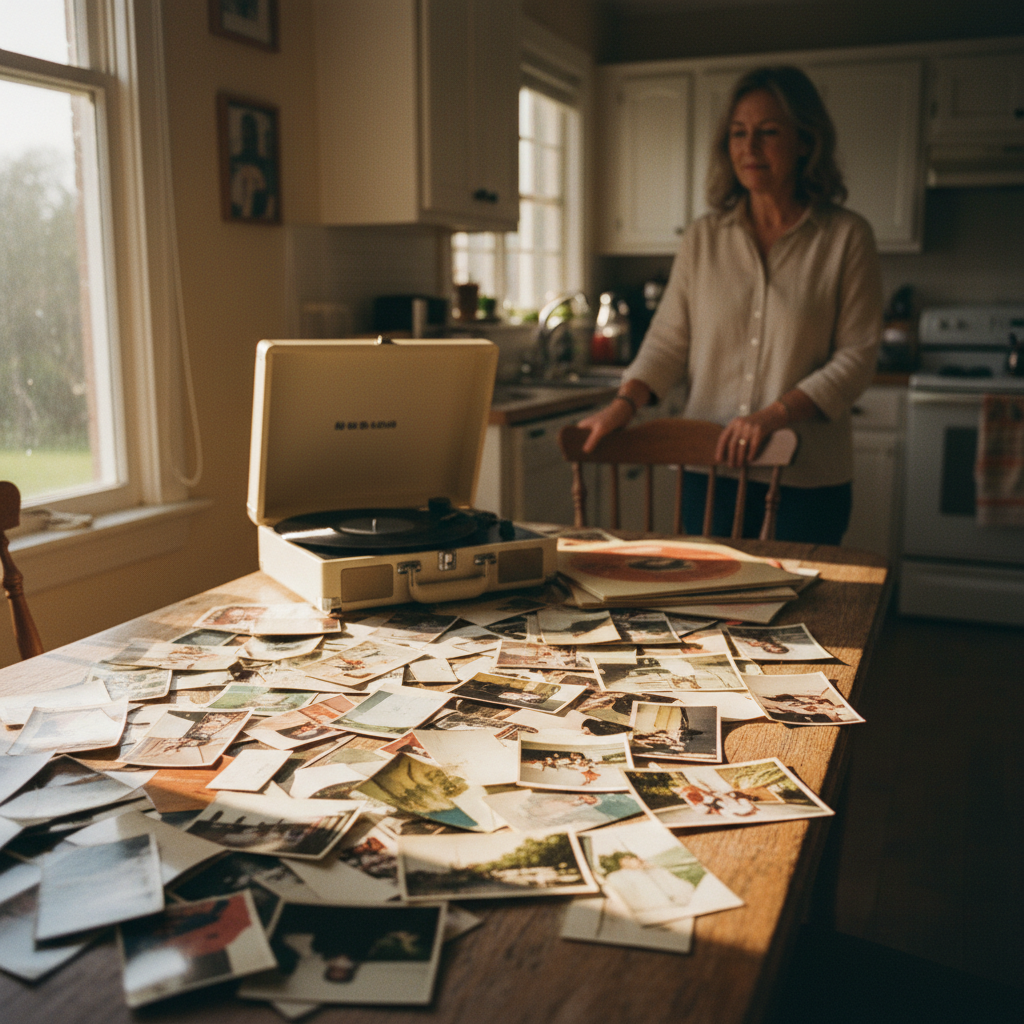
Choosing songs for a memorial slideshow means matching music to memory - here's how to find something that genuinely sounds like them.
Key takeaways
The problem Choosing music for a memorial slideshow feels high-stakes because it has to speak for someone who can no longer choose for themselves.
Core insight The right song is the one that matches the tone and pace of the images and comes from evidence of who the person actually was - their playlists, their habits, the artists they turned up.
Practical outcome With a clear framework for pace, lyrics, and length - and one quiet run-through before the service - you can choose music that genuinely sounds like them.
You're building a memorial slideshow and you've hit the part nobody warns you about: the music. You have the photos. You know the order. And now you're sitting with a blank search bar and the quiet pressure of choosing songs for a memorial slideshow that actually sound like the person on screen.
There is no single right answer. But there is a way to think about it that helps.
Music is a shortcut to how they felt
A song carries memory faster than words alone. Before you've registered a single lyric, you've already felt something - the tempo, the key, the particular warmth or weight of an instrument. That's why the music choice matters so much in a slideshow: it's telling people how to feel before they've even focused on a face in a photograph.
Think about how music was already part of who they were. The artist they turned up on road trips. The genre that made them move in the kitchen. The album they put on when they needed to think. You're not choosing background noise. You're choosing a feeling to sit underneath every image of their life.
The right song doesn't have to be their all-time favorite. It has to match the moment you're creating - the tone of the slideshow, the pace of the photos, the feeling you want people to leave with.
Start with what you already know about their taste

Before you search for anything, take stock of what you already know. What was always playing in their car? What did they hum while they worked? What did they ask someone to play at dinner?
Taste changes over time. The music they loved at 25 is not the music they loved at 65. Ask yourself: what was the soundtrack of the years you knew them best? That's the era to start in.
Then look for evidence. Check their streaming history if you have access - their Spotify account, Apple Music library, or YouTube watch history may still be active. Look for saved playlists. Old CDs or vinyl tell you something too. If you're not sure, ask a sibling or close friend to name three artists without overthinking it. You'll probably hear the same name twice.
Say your father was a lifelong jazz listener
Imagine his Spotify account is still logged in on an old tablet. His most-played artist over the last five years was Bill Evans. You pick Peace Piece - solo piano, slow and meditative, just under seven minutes. It works because the tempo matches a slideshow of still, intimate photographs, and the mood is exactly what you'd describe if someone asked what it felt like to sit in the same room as him.
Match the song's pace and mood to the slideshow's arc
A fast-paced slideshow of action photos - hiking, dancing, travel - needs a song with momentum. A slow sequence of family portraits and quiet moments needs something that breathes.
Ask a few simple questions about the song: Does it build, stay steady, or fade out? Does it feel joyful, reflective, tender, or energetic? A song that builds works well if your photo sequence moves from childhood to later life - it mirrors the arc of a life without you having to say so.
The simplest test: play the song while scrolling through the photos in your head. Does the rhythm feel right? Does the mood match? If something feels off after thirty seconds, it's off. Trust that.
Consider whether lyrics help or get in the way

Lyrics with staying power - Landslide, Fast Car, Here Comes the Sun - can anchor a slideshow and give people something to hold onto. But lyrics also demand attention. People will read them, not just hear them. If the words are about loss or grief directly, they can overwhelm the images.
Lyrics work best when they're about the person's life, not about death. Songs about movement, love, home, time - these tend to land better than songs written specifically about farewell.
If you want the images to lead, try an instrumental version instead. Search for an instrumental, piano or string version of a song they loved - many exist and they carry the same emotional memory without the words competing for attention.
One gentle warning: avoid songs that feel too generic to the occasion - My Way, Wind Beneath My Wings - unless they genuinely belonged to this person. A song that feels borrowed from a different memorial doesn't serve yours.
One song, or a short playlist
A single song - three to five minutes - works well for a focused slideshow of twenty to forty photos. A short playlist of two or three songs, ten to fifteen minutes total, suits a longer sequence or a tribute that spans many decades.
If you're using more than one song, give them a shape: open with something that sets the tone, shift in the middle, close with something that lingers. The songs don't have to be the same genre - they just have to feel like they belong to the same person.
One practical note on copyright: if the slideshow will play at a service in a venue, or be uploaded to a platform like YouTube or Vimeo, there are licensing rules that apply. Some platforms flag or mute copyrighted audio automatically. For music played publicly at a service, check with the venue or funeral home about what's covered.
If you're finding this hard
Choosing music for someone who has died can feel like you're being asked to speak for them - to get it right, to find the one true song. You're not. You're choosing something that opens people's hearts a little, so they can be present with the photographs. A good song is enough. If you're stuck between two, play both and notice which one makes you want to keep looking at the photos rather than closing your eyes. That's the one.
If you're starting from nothing, search for memorial or remembrance playlists as a starting point, not a script. Or ask two family members to each send you three songs without explaining why. You'll usually find one that belongs.
Listen to it once before the slideshow plays - songs for a memorial slideshow deserve one quiet rehearsal
Before anyone else sees it, play the slideshow through once on your own with the sound on. You'll catch any technical issues - audio sync, volume levels, a song that cuts off too early. You'll notice if the mood lands the way you hoped.
And you'll have a moment to sit with it: the photos, the music, the person. That moment is yours before it belongs to the room.
If you want a place to keep the photos themselves - laid out year by year, with short highlight films by decade that your family can watch together - Glow is built for exactly that. But start here, with the song. Get that right first. And if you haven't yet settled on which images to include, choosing the right photos from a large collection is a natural next step once the music feels settled. Once the slideshow is done, you might also think about what happens to the family photos afterward - who holds onto them, and how they get preserved for the people who come next.
Frequently Asked Questions
Can I use any song I want in a memorial slideshow?
For a private slideshow shown only at a service or shared with close family, copyright is rarely enforced. If you upload the slideshow to a platform like YouTube or Vimeo, the platform may automatically mute or flag copyrighted music. For music played at a venue, check with the funeral home or venue coordinator about what licenses they hold - some cover public performance rights, some do not.
How long should the music be for a memorial slideshow?
Match the length of the music to the number of photos. A single song of three to five minutes works well for twenty to forty photos shown at a comfortable pace. If you have more photos or want to cover multiple life chapters, two or three songs totalling ten to fifteen minutes gives you more room without overstaying.
What are some good instrumental options for a memorial slideshow?
Search for an instrumental, piano or string version of a song the person already loved - many popular songs exist in quiet instrumental arrangements that carry the same emotional resonance without lyrics competing with the images. Classical pieces, ambient guitar, and solo piano recordings all tend to sit well underneath photographs.
Should I use their favorite song, or something that fits the mood better?
Ideally both - but if you have to choose, fit the mood. A song that was genuinely theirs will always mean more than a perfectly paced stranger. If their favorite song has a tempo or tone that doesn't match the slideshow, look for a slower or instrumental version of it, or choose a song from the same artist or era that fits more naturally.
What if family members disagree on the music choice?
It helps to separate the question into two parts: what did this person actually listen to, and what serves the room. Ask everyone to suggest songs the person loved rather than songs they personally like. When the choice is grounded in evidence - their playlists, their habits, what they always played - it's easier for the family to agree, even if the song isn't everyone's favorite.