Family Story Night: A Simple Way to Get Grandparents Talking at Dinner
By The Glow Editors · September 26, 2026
Category: ask-them-now
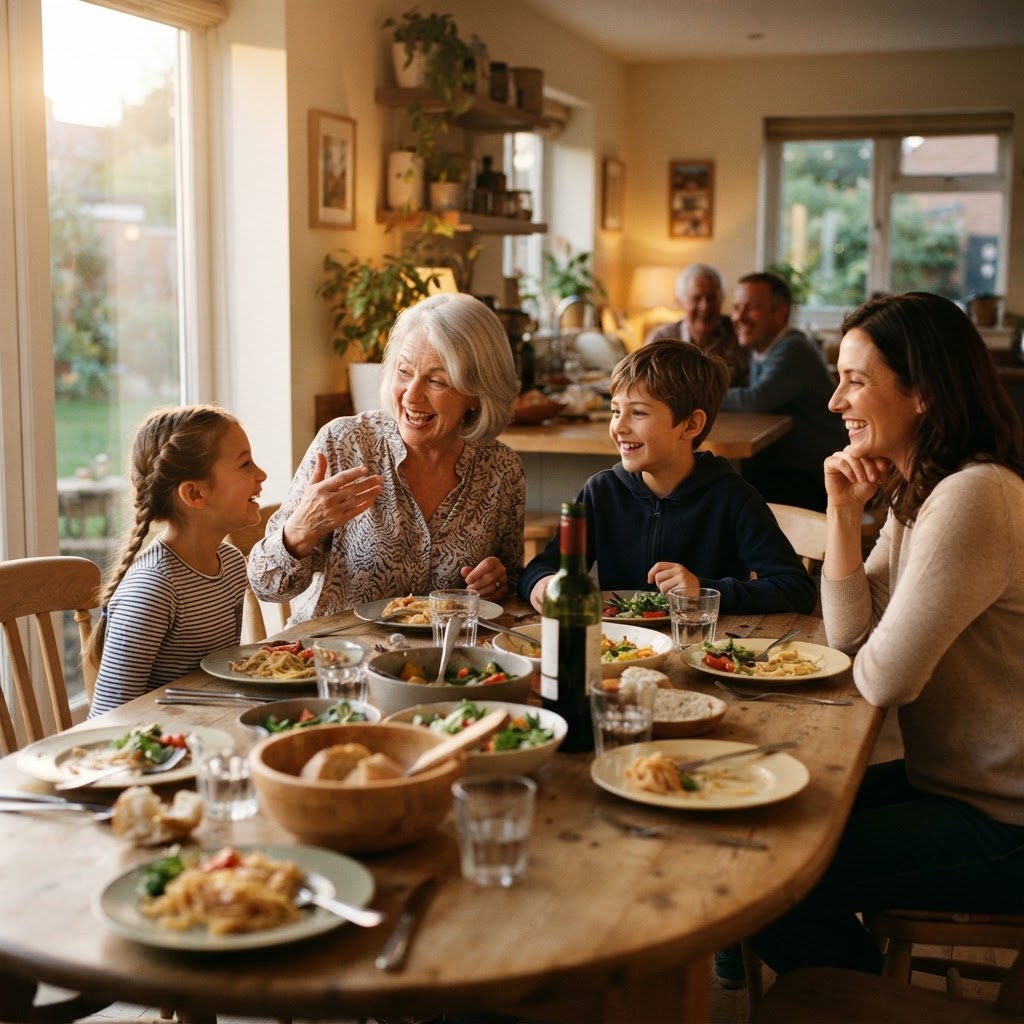
A family story night is the simplest way to get grandparents talking - one theme, one question card, and a regular dinner you already have.
Key takeaways
The problem Grandparents' stories disappear not because no one cares, but because no one asked before it was too late.
Core insight A regular dinner with one theme and one question card is enough to build a real family archive over time.
Practical outcome Pick your next family dinner, choose one theme, and put a question card at each plate.
Picture this: your grandmother is telling the story of her first apartment, the one above the bakery on a street you've never been to, and she mentions - almost in passing - that she paid the landlord in eggs because she didn't have the cash that month. Nobody asks a follow-up question. Dinner moves on. You never hear about the bakery again.
A family story night exists to catch those moments before they drift past. Not a formal interview. Not a project. A regular dinner with one question on the table and the permission to actually listen.
Why dinner is the right time for family history
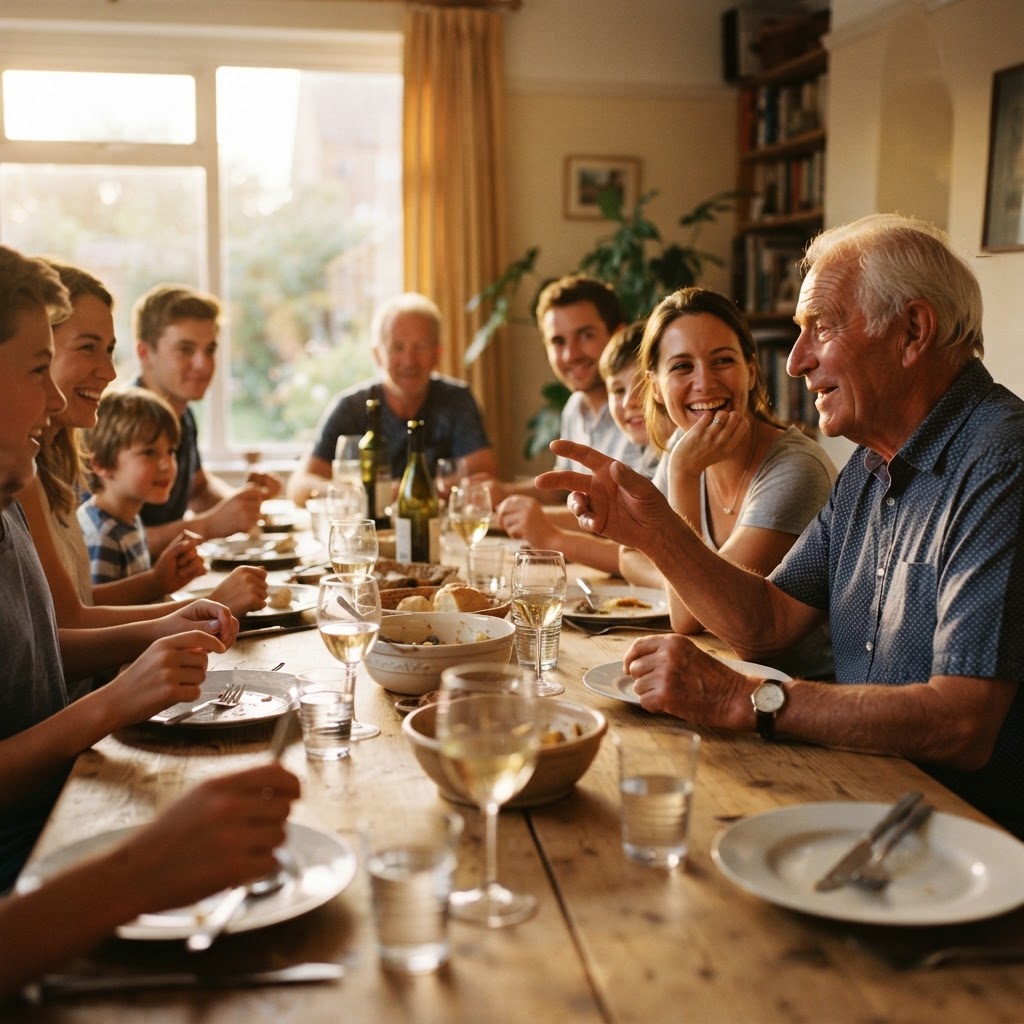
Dinner is already happening. No one has to drive somewhere, no one has to clear a schedule, and the rhythm of eating - passing dishes, refilling glasses - softens the self-consciousness that makes people clam up when they feel like they're being recorded for posterity.
What gets lost when we skip these conversations isn't just the facts. It's the way your grandfather pauses before he gets to the good part. It's the inside joke your aunt and your mother share that dates back to a summer you weren't alive for. Once the person who holds that story is gone, so is the particular shape of it.
You don't need a recorder, a notebook, or a plan. You only need to ask.
How to set up a family story night - the simplest version
Pick a night you already have. A monthly Friday dinner, a holiday meal, a Sunday gathering that happens anyway. Monthly is sustainable. Once a quarter still works. The point is regularity, not frequency.
Choose one theme for the evening - first jobs, how the grandparents met, the house they grew up in, the worst holiday, the best meal anyone ever made. One theme, announced casually when people sit down: "I want to hear about your first job tonight. Who wants to go first?"
Before dinner, put one question card at each place, or drop a handful into a jar in the middle of the table. Keep the rule simple: everyone tells one story, the youngest person at the table asks the first question, and phones stay away except for one recording device placed openly in the center - with permission asked and given before dinner starts. Bring one old photo as a prompt. A photo of the house they grew up in, the street they got married on, a work uniform. Something physical to hold and look at tends to open people up faster than any question alone.
Aim for twenty to thirty minutes of intentional conversation, then let it drift wherever it goes. Don't try to squeeze everything into one night. The best story nights end with people still talking at the table an hour later, long after the dishes have been pushed aside.
12 question cards that actually get stories moving

These are organized loosely by theme. Use the ones that suit the evening. Ask one, listen fully, and let the silence after an answer sit for a moment before you move on.
Childhood and home
What did your bedroom look like when you were ten? - Sensory questions like this one pull up details people haven't thought about in decades.
What's the first meal you remember loving? - Food is almost always a door into something bigger.
What was your neighborhood like on a summer evening? - This one usually leads somewhere unexpected.
Work and money
What was your first job, and what did you spend the first paycheck on? - The second part is the part that gets people laughing.
What's the hardest work you ever did? - People who downplay their own stories will often open up when you frame it this way.
Was there a job you wanted and didn't get? - This one tends to go in directions nobody expected.
Love and family
Tell me about the first time you met [partner's name]. What did you actually think of them? - The honest answer is almost always funnier than the official version.
What's something your own parents did that you swore you'd never do - and then did anyway? - This one is good for getting the whole table talking.
Hard times
What's a time you had to start over? - Keep it open. Let them choose what "starting over" means to them.
What's a worry you carried for a long time that eventually resolved itself? - This is a gentler way in than asking directly about hardship.
Things they know
What's something you know how to do that most people your age have forgotten? - Practical knowledge - canning, welding, reading weather, making do - belongs in the archive too.
What do you wish someone had told you at my age? - Save this one for later in the evening, when people are more comfortable.
If their answer sparks a follow-up question, ask it. The best stories in any family story night come from what you're genuinely curious about, not from working through a list. If you're looking for more starting points, this collection of questions to ask grandparents that even young children can lead with is worth keeping nearby.
If the conversation stalls
Some people need a moment to find the story. Some genuinely feel shy about talking about themselves, even to family. A pause isn't failure - it's someone thinking.
If it stalls, try a pivot: "Tell me about a photo you love" or "What's something you wish I knew about you?" Or go simpler: pass the old photo around and ask what anyone remembers about the day it was taken.
If someone says they don't remember, or that nothing interesting happened to them, try: "I know you think it's ordinary. I want to hear it from you anyway." People who lived through genuinely interesting times often don't recognize their own stories as remarkable.
A pass is always allowed. If someone doesn't want to share, let them pass without comment. Pressure kills the mood faster than silence does.
And if one evening doesn't yield much: "We don't have to finish tonight. Let's do this again next month." That reframe - from event to habit - is what makes story nights actually work over time.
Including relatives who aren't at the table
A cousin in another city, an aunt who lives alone, an in-law who married into the family and holds a whole other set of stories - they can join a story night on a video call propped up at one end of the table. It's a little awkward for the first five minutes and usually fine after that. Ask them the same question you're asking everyone else. Give them the same room to pass if they want to.
In-laws count. Step-grandparents count. Chosen family counts. The stories that make up a family aren't always carried by blood relatives.
Keeping the stories once you have them
After the evening, do three things while it's fresh. Save the recording to a cloud folder labeled with the grandparent's name and the date. Write the three best lines in a shared note - the line that made everyone laugh, the detail nobody had heard before, the sentence that landed quietly and stayed with you. Then send a short message to whoever wasn't there: "I recorded Grandma talking about her first job. I thought you'd want to hear it."
Story nights also have a way of surfacing the objects that carry meaning - a ring, a recipe card, a uniform - and those objects come with their own histories worth capturing. Knowing how to record the story behind a family heirloom before it's lost makes the archive you're building that much richer.
If you want a single place where the recording, the photo you used as a prompt, and the notes from the evening can all live together - and where cousins and siblings can add their own memories to the same story - Glow lets your whole family build that archive together, so the people who weren't at the table can still be part of what gets kept.
Start with the next dinner you already have planned. One theme, one question card per plate, one photo face-down in the middle. Ask who wants to go first. Then listen like you mean it. And if the conversation opens something deeper than you expected, how to talk to aging parents about their life without it feeling morbid can help you keep that door open long after dinner ends.
Frequently Asked Questions
How do I start a family story night if my grandparent is reluctant to talk about themselves?
Try a concrete, low-stakes prompt rather than an open invitation. Show them an old photo - one you already have - and ask what they remember about the day it was taken. Physical objects tend to open people up faster than a question alone. Keep the first evening short, around twenty minutes, and make clear that passing is always allowed. Once they see that it's a conversation, not a deposition, most people relax.
What are the best questions to ask at a family story night?
Open-ended questions that invite a specific memory work best. 'What was your first job, and what did you spend the first paycheck on?' and 'Tell me about the first time you met your partner - what did you actually think of them?' are reliable starters. Avoid yes/no questions and questions that feel like a school exam. The goal is a story, not a fact.
Should I record the conversation at a family story night?
Yes, if you have permission. Ask before dinner starts, not mid-conversation. Place one recording device openly in the middle of the table rather than holding a phone in someone's face. A voice memo on a phone works fine. Afterwards, save the file to a cloud folder with the speaker's name and date so it doesn't disappear if you lose your phone.
How often should we do a family story night?
Monthly is sustainable for most families. Once a quarter still builds a real archive over time. The key is making it a recurring habit rather than a one-time project - tell the family 'we're doing this again next month' at the end of each evening. Holiday meals are a natural anchor if regular dinners aren't possible.
Can relatives who live far away join a family story night?
Yes. A video call propped up at one end of the table works well enough. The first few minutes are usually a little awkward, and then the conversation normalises. Give the remote relative the same question card everyone else has, the same turn to speak, and the same right to pass. In-laws, step-grandparents, and relatives in other time zones all have stories worth gathering.