What Did They Do All Day? Questions to Ask Grandparents About Their Working Life
By The Glow Editors · September 26, 2026
Category: ask-them-now
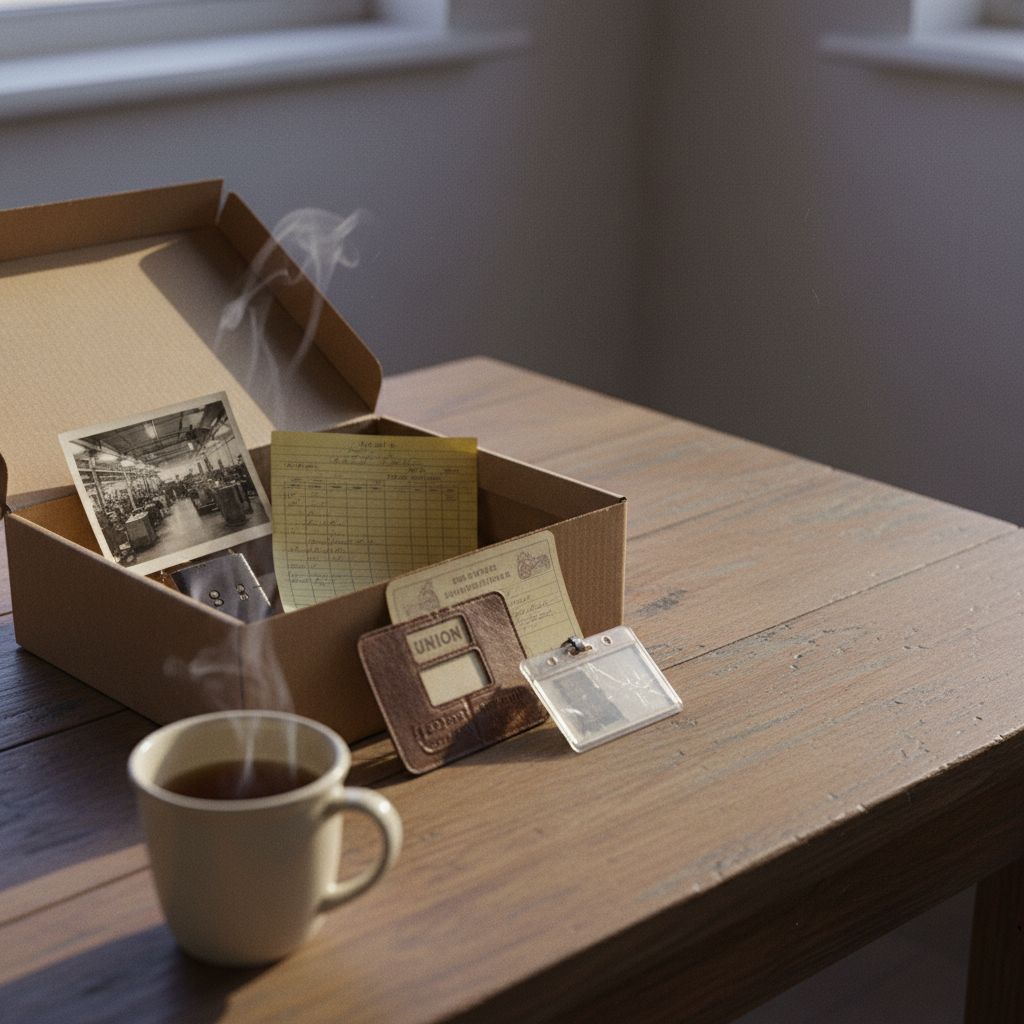
The questions to ask grandparents about their life that actually work - starting with work itself, because relatives who won't talk about feelings will talk about a bad boss for an hour.
Key takeaways
The problem Most people know a grandparent's job title but nothing about what their working life actually felt like from the inside.
Core insight Work questions unlock stories that direct questions about feelings or memories often can't - because work is concrete, relational, and full of detail.
Practical outcome A single recorded conversation, saved with a clear filename and backed up the same day, can hold a working life that would otherwise disappear.
You know your grandmother worked at the post office for thirty years. Or that your grandfather had a farm, or a shop, or served somewhere cold for two years before you were born. You know the job title, maybe. What you probably don't know is what he ate for lunch, who made him laugh, or the moment he realised he was actually good at something.
These questions to ask grandparents about their life are built around a simple observation: people who won't talk about feelings for five minutes will talk about work for an hour. Work is concrete. It has hours and tools and annoying colleagues. It has a first day and a worst week and a moment of quiet pride. It's a way in.
This guide covers all kinds of work - paid jobs and family businesses, farming and factory floors, running a household, raising children, army or national service, and starting over after moving countries. If your grandparent did it, it counts.
How to make this conversation easy

Morning coffee tends to work better than Sunday dinner. People are less tired, less distracted, and the quiet of an ordinary weekday morning makes memory easier than the noise of a family occasion. Sit somewhere they're comfortable - their kitchen, their usual chair.
Bring three things: your phone for audio (because audio catches the laugh when they describe a terrible boss, and photos don't), a photograph from their working years if you can find one, and the willingness to compare. Asking "is that similar to how I get paid now?" or "did you have a commute like mine?" gives them a frame and often opens a door. If you're not sure who's who in old photographs, identifying unknown faces in family photos can help you prepare the right pictures before you sit down together.
One permission to hold onto before you start: there's no right order to these questions. Skip any that don't land. Follow the story wherever it goes - that's often where the best part is.
Thirty to forty-five minutes is a good first session. Long enough to go somewhere real, short enough that it doesn't feel like an occasion.
Questions about first jobs and first pay
First jobs reveal what someone needed money for, who believed in them, and what they thought was possible. They're also usually funny, or difficult, or both.
What was the first job you ever got paid for - even if it was just pocket money from a neighbour?
How old were you, and how did you get the job?
What did you do with your first wage?
What was the worst thing about it?
Did you ever get in trouble at that job - and what happened?
The last two questions are the ones that tend to surface a story nobody planned to tell. Let them run.
Questions about a normal working day
The texture of daily working life - the hours, the tools, the commute, what they ate at lunch - is exactly what disappears fastest. Ask about the ordinary before you ask about the extraordinary.
What did a normal day actually look like, from when you left the house to when you got back?
What tools or skills did you use that most people wouldn't know about?
What did lunch look like - did you bring something, or eat with colleagues, or not stop at all?
How did the job change between your first year and your last - what shifted?
Can you show me something - a skill, a technique, a way of doing something from that work - and can I film it?
The last question is worth asking directly. A grandparent demonstrating how to fold a postal bag, or how they tested soil, or how they held a particular tool, is something a recording can keep in a way that a description never quite does.
Questions about the people - bosses, colleagues, customers
Work is not just tasks. It's the person who trained you and the one who made every Monday harder than it needed to be. These questions often produce the most vivid stories.
Who was the most memorable person you ever worked with, and why?
Did you have a boss you really learned from - or one you really didn't?
Did you ever train someone new, or help someone move up? What was that like?
Did you have close friends at work? Do you still talk to any of them?
What do you wish people had understood about what you actually did?
Questions about hard times - losing a job, money worries, starting over
These questions feel personal, and they are. Frame them gently, and don't push if the answer is short. But don't skip them either - the hard chapters are often where character lives.
Was there a time when work was really difficult - financially, or in other ways?
Did you ever lose a job, or have to start over in a new place or a new field?
Did your work ever conflict with time with family - how did you decide what to do?
Was there something you gave up to stay in a job, or to leave one?
Was there a moment at work when things went wrong, and what did you learn?
If they moved countries, or came out of the army, or switched from farming to factory work, ask specifically about that transition. Starting over is its own story, and it's usually a good one. If your grandparent served before entering civilian work, the questions to ask a veteran grandparent about their military service cover that chapter in more depth.
Questions about pride and advice
Not "what are you proud of?" - that question can feel like a test. Instead, ask what they were good at, what they'd want you to know, what they'd tell you about your own work now.
What were you genuinely good at in your work - the thing that came naturally to you?
What would be different if you hadn't done this job - who did your work help?
How did this work shape who you became?
If you could go back and tell your younger self one thing about work, what would it be?
What's one piece of advice about work or money you'd give me, knowing what you know now?
The last question often lands differently than anything else in the conversation. It gives them permission to speak directly to you - not to the past, but to your actual life.
What to do with the answers
Save the audio file the same day, with a filename that makes sense in ten years: GrandpaJoe-work-conversation-June2025.m4a. Then back it up somewhere that isn't just your phone - a folder in Google Drive or iCloud takes thirty seconds and means a cracked screen doesn't cost you the whole thing.
Listen back within the week, while it's fresh, and write down two or three moments that surprised you. You don't need to transcribe everything. Just the parts that stayed with you. When a good answer opens up an unexpected thread, knowing how to ask a strong follow-up question can take a brief answer and turn it into a full story.
If your grandparent died before you could ask these questions, their siblings, their close friends, or anyone who worked alongside them may hold parts of the same story. It's worth asking.
If you'd like a way to have this kind of conversation with a little more structure - or in another language - Talk with Glow asks about work and life out loud in Hebrew or English and keeps each answer as a recording your family can return to.
You don't have to do anything polished with what you record. A folder with an audio file and a few notes is enough. The point is that you asked - and that somewhere, there's now an answer.
Frequently Asked Questions
What are good questions to ask grandparents about their working life?
Start with concrete, easy questions - what was their first paid job, how did they get it, what did a normal day look like. Then move toward the relational and reflective: who shaped them at work, what was hardest, what they're proud of. Work questions tend to open people up who wouldn't respond as well to direct questions about feelings or memories.
How do I record a conversation with my grandparent without it feeling awkward?
Place your phone on the table at the start and mention it naturally - 'I'd love to keep this, do you mind if I record?' Most people forget the phone is there within a few minutes. Morning tends to work better than evening. Sitting in a familiar space, like their own kitchen, helps them relax and remember. Thirty to forty-five minutes is a good first session.
What if my grandparent is reluctant to talk about the past?
Work questions are often easier than memory questions because they're concrete. Asking 'what tools did you use?' or 'what did lunch look like on a typical day?' gives someone something specific to answer. Bringing a photo from their working years, or comparing their experience to your own job, often gets things moving. Follow whatever thread they pick up - don't push back to the question you originally asked.
How do I save a voice recording so I don't lose it?
Save the file the same day with a clear filename that includes the person's name and the date - something like GrandmaRuth-work-conversation-June2025.m4a. Then copy it to at least one cloud location, such as Google Drive or iCloud, so a lost or broken phone doesn't cost you the recording. If you want to share it with family, a shared folder works better than a messaging app, where files eventually expire.
What if my grandparent died before I could ask them these questions?
Their siblings, close friends, former colleagues, or anyone who worked alongside them may remember parts of the same story. Family shops, farms, or workplaces sometimes have records, photographs, or other people who knew them. It's worth reaching out - you may find that someone has been waiting for exactly this question.