The House They Grew Up In: 25 Questions That Open a Whole Childhood
By The Glow Editors · September 26, 2026
Category: ask-them-now
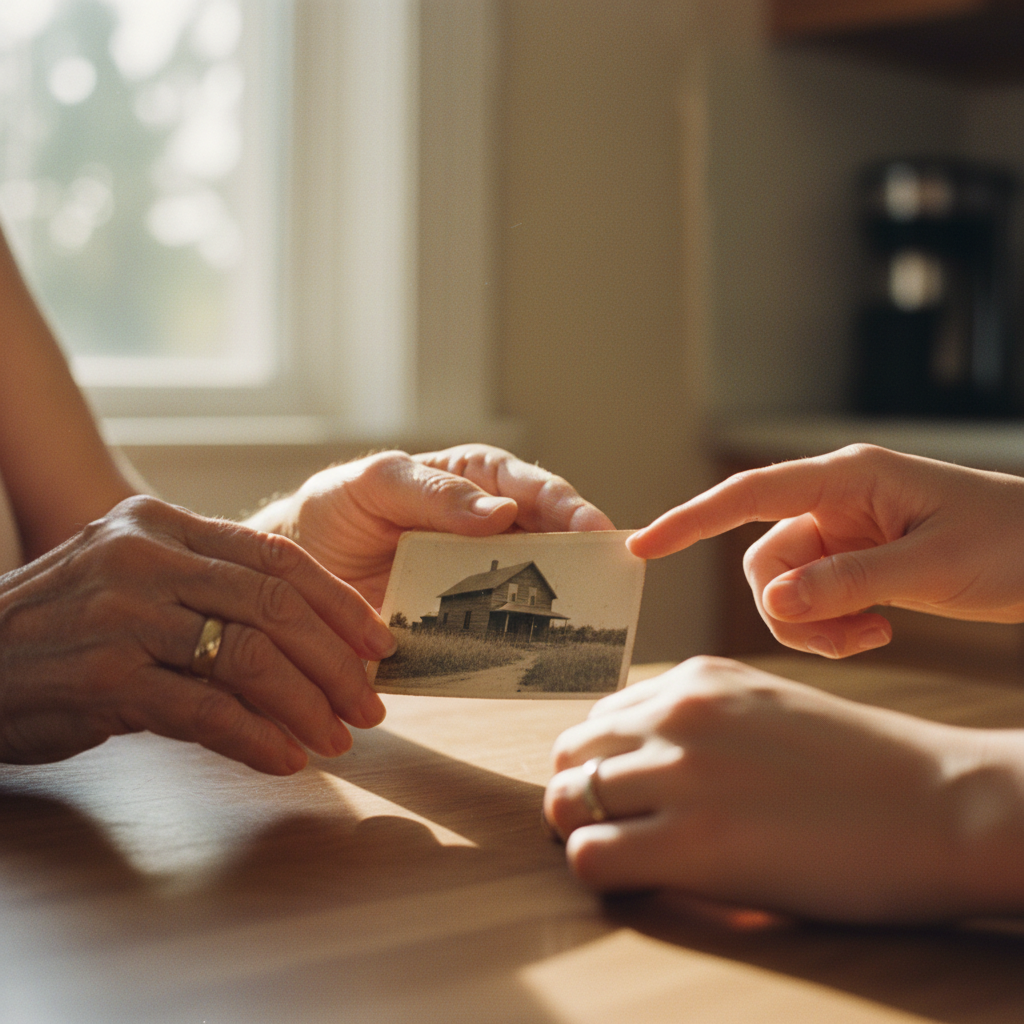
One house, walked through room by room, can open a whole childhood - here are 25 questions to ask parents and grandparents about where they grew up, and how to save what they tell you.
Key takeaways
The problem Childhood memories tied to a specific place are among the easiest to lose - and the easiest to unlock, if you know how to ask.
Core insight Walking through a house room by room, starting at the front door, gives a conversation natural shape and often produces stories no direct question would have reached.
Practical outcome A single recorded conversation, named clearly and stored in two places, gives the whole family access to a piece of the story they would otherwise never have heard.
Ask your parent to draw the floor plan of the house they grew up in. Give them a piece of paper and a pen and just say: start at the front door. Most people begin slowly - a rectangle, a hallway - and then something happens. The pencil finds the kitchen window. They remember the step that was always creaky. They look up and they're somewhere else entirely, and questions to ask parents about their childhood suddenly answer themselves.
One place, walked through carefully, can open a whole life. These 25 questions follow that house room by room - from the street outside to the yard in back. Pick the ones that feel right. Skip the rooms that hold hard things. Let them draw while they talk.
How to make this conversation easy
Sit somewhere unhurried - a Sunday morning, after lunch, when there's nowhere to be. Bring whatever photos you have: the house itself, the street, a school photo from that era. Old images do something a direct question can't; they drop a person back into a place they'd stopped visiting.
Set your phone on the table and ask, simply: "Do you mind if I record this? I want to keep your voice." Almost no one says no. Use your phone's built-in voice memos app - it's reliable, it saves automatically, and you don't need to think about it again. The recording will carry things a transcript never can: the pause before they answer a hard question, the laugh that comes out of nowhere, the particular way they say a name.
If they start telling you about the neighbor's dog instead of the kitchen, that's the good stuff. Let them go. The questions are a door, not a script. If you want to go deeper on any moment they mention, a well-placed follow-up question is often where the real story lives.
The street and the front door: arriving at the house

What did the front of the house look like? What color was the door?
How did you get in after school - did you have a key, or did someone always let you in?
What was the street like? Could you hear traffic, neighbors, anything specific?
What was the first thing you saw when you walked in?
Was there a place just outside - a step, a wall, a corner - where you used to sit?
Follow-up: What did it smell like, coming home?
The kitchen: where most of it actually happened
What did the kitchen look like? Where did people sit?
Who cooked, and what did that person make most often?
Was there a meal you looked forward to, or one you dreaded?
What happened at mealtimes - was it noisy, quiet, did everyone eat together?
Who was the worst cook in that house?
Follow-up: Is there a smell from that kitchen you'd recognize anywhere?
Their bedroom: the private part of the house
Did you have your own room, or did you share?
What was on the walls?
Where did you go when you needed to be alone?
What's one thing you kept in your room that mattered to you?
Where was the worst place to hide when you were in trouble?
Follow-up: What did you think about, lying in bed at night?
The living room and who came through it
What was the living room used for - television, visitors, something else?
Who visited most often? Who always seemed to be there?
Was there a neighbor you were closest to? Tell me about them.
Was there someone in the neighborhood everyone had a strong opinion about?
What happened there that you still think about?
Follow-up: Is there someone from that time you've lost touch with and still wonder about?
Outside: the yard, the street, the corner shop
What was outside the house - a yard, a garden, a street you played on?
Where did you go after school or on summer days?
Was there a shop, a park, a corner somewhere that was yours?
What's one rule your parents were strict about - curfew, chores, something else?
If you drove past that house today, what do you think would surprise you most?
Follow-up: Is there anything about that house you're glad we talked about - something you haven't thought about in a long time?
What they want remembered
Before you stop recording, ask two more things. First: "What was hard about living there?" Let them answer fully. Then: "What made it worth it?" These two questions together give you the honest version - not a polished memory, but the one they actually lived.
And then, if it feels right: "What do you want your grandchildren to know about the house you grew up in?" That question tends to produce something neither of you expected. If you're looking for ways to make that conversation feel natural for younger family members, questions framed for children often draw out answers that surprise everyone in the room.
What to do with what you've got
Keep the floor plan they drew. Photograph it and put it with the audio file. Name the recording clearly - their name, the address if you know it, the year you recorded it - and save it in at least two places: your phone's cloud backup and an external drive or a folder someone else in the family can reach.
If you want a transcript, your phone's built-in transcription tools or a free web service can produce a rough version in minutes. It won't be perfect, but it's searchable, and it means a sibling who wasn't there can read it at their own pace. A transcript is a bonus, not a requirement.
To share it: drop the audio into a family group chat with one line of context - "Recorded this with Mum last Sunday, she talks about the kitchen and the street outside" - and let people come to it when they're ready. Or look up the address together on a map and see what's there now. That small act of looking often opens another hour of conversation. If old photos of the house or street come up along the way, there are practical ways to identify the unfamiliar faces that turn up in them.
The drawing, the recording, and any photos of the house can all sit together in your family's private Glow space, where siblings and cousins can add their own memories of the same rooms - the way they remember the kitchen smelling, the sibling who always got the better bedroom. One house, told from every angle, is a remarkable thing to keep.
Frequently Asked Questions
How do I get a reluctant parent to talk about their childhood?
Start with something physical rather than a direct question. Ask them to draw the floor plan of the house they grew up in, or spread out old family photos and just look at them together. Objects and images lower the threshold - most people begin talking without realizing they've started. Let the conversation find its own pace, and don't insist on going in order.
What's the best way to record a conversation about childhood memories?
Your phone's built-in voice memos app is reliable enough for this. Set it on the table, ask permission simply - 'Do you mind if I record this? I want to keep your voice' - and then leave it running. You don't need separate equipment. After the conversation, name the file clearly with the person's name and the date, and back it up to at least two places: cloud storage and somewhere a family member can access.
What questions about childhood memories tend to get the best answers?
Specific sensory and situational questions open more than general ones. 'What did it smell like coming home?' gets a richer answer than 'What was your house like?' Questions about small rules, family characters, and funny or embarrassing moments tend to unlock stories people haven't told in years. Starting at the front door and walking through the house room by room gives the conversation a natural structure without feeling like an interview.
Should I transcribe the recording, or is audio enough?
Audio is enough - the recording is the thing that matters most. A transcript is useful if you want to share the story with family members who prefer reading, or if you'd like to search for specific names and places later. Free transcription tools can produce a rough version quickly, but they're imperfect. Think of a transcript as a helpful index to the audio, not a replacement for it.
What if some parts of their childhood home hold difficult memories?
Let them skip any room they want to skip. You can acknowledge this simply: 'We don't have to go there if you'd rather not.' Some childhood homes hold hard things alongside the good, and the questions in any list are a door, not a requirement. If they do want to talk about something difficult, follow their lead on how much to go into - and ask 'What made it worth it?' as a gentle counterweight, not to erase the hard part but to hold both.