Recording a Parent's Stories in Their First Language, for Grandchildren Who Don't Speak It
By The Glow Editors · September 26, 2026
Category: ask-them-now
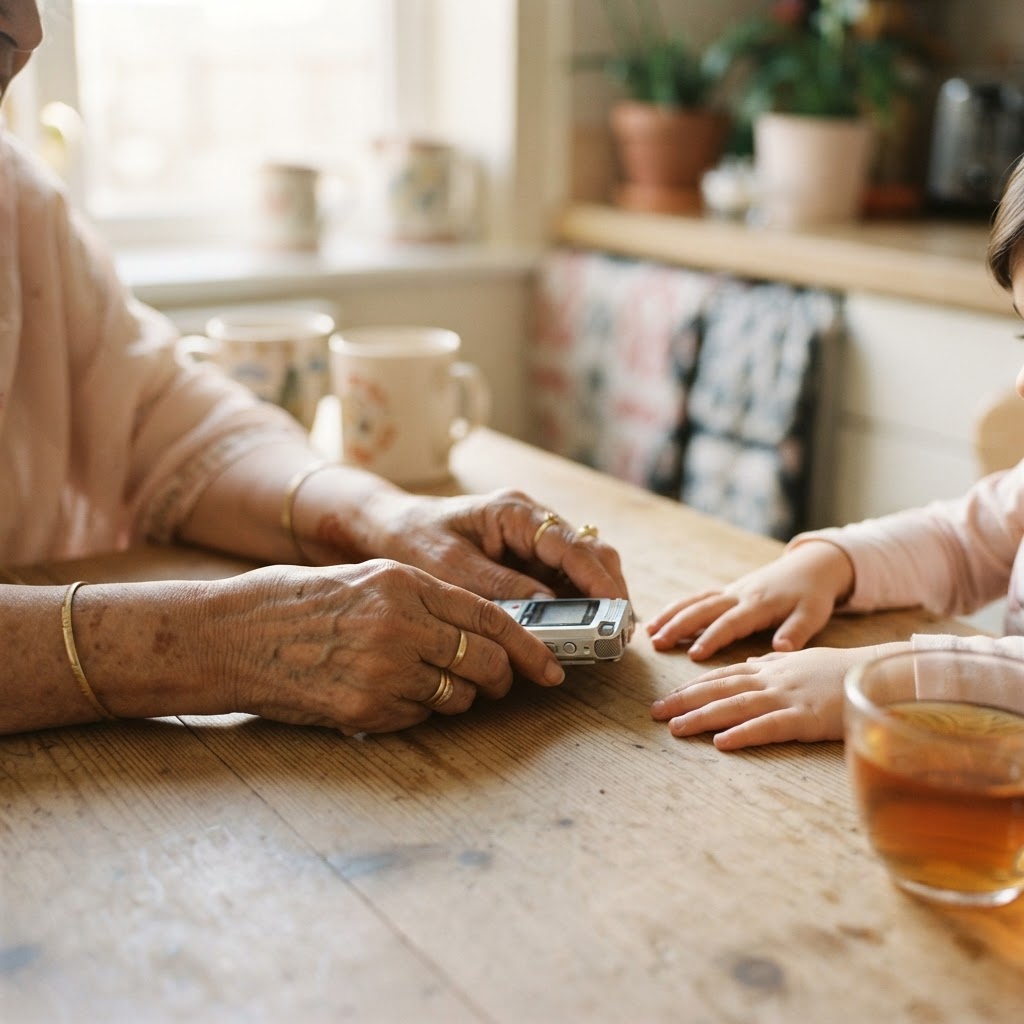
A plain, step-by-step guide to recording a parent's stories in their first language - so grandchildren can hear the voice, the feeling, and the words that belong to no other person.
Key takeaways
The problem A parent's stories exist fully only in the language they grew up speaking, and most families never record them in that language.
Core insight Recording in the first language, then adding a short English summary, gives grandchildren both the voice and the meaning.
Practical outcome You can make a lasting recording this week with a phone, a quiet room, and one story your parent chooses to tell.
There is a moment many of us recognise: you overhear your mother on the phone, speaking in the language she grew up in, and something in her voice is completely different - faster, softer, more herself. Then you look at your children and realise they will never understand a word of it. That is the moment to record parents' stories in their native language, before that voice exists only in your memory.
You do not need a microphone stand or editing software. A phone, a quiet room, and thirty minutes are enough to start.
Before you record anything
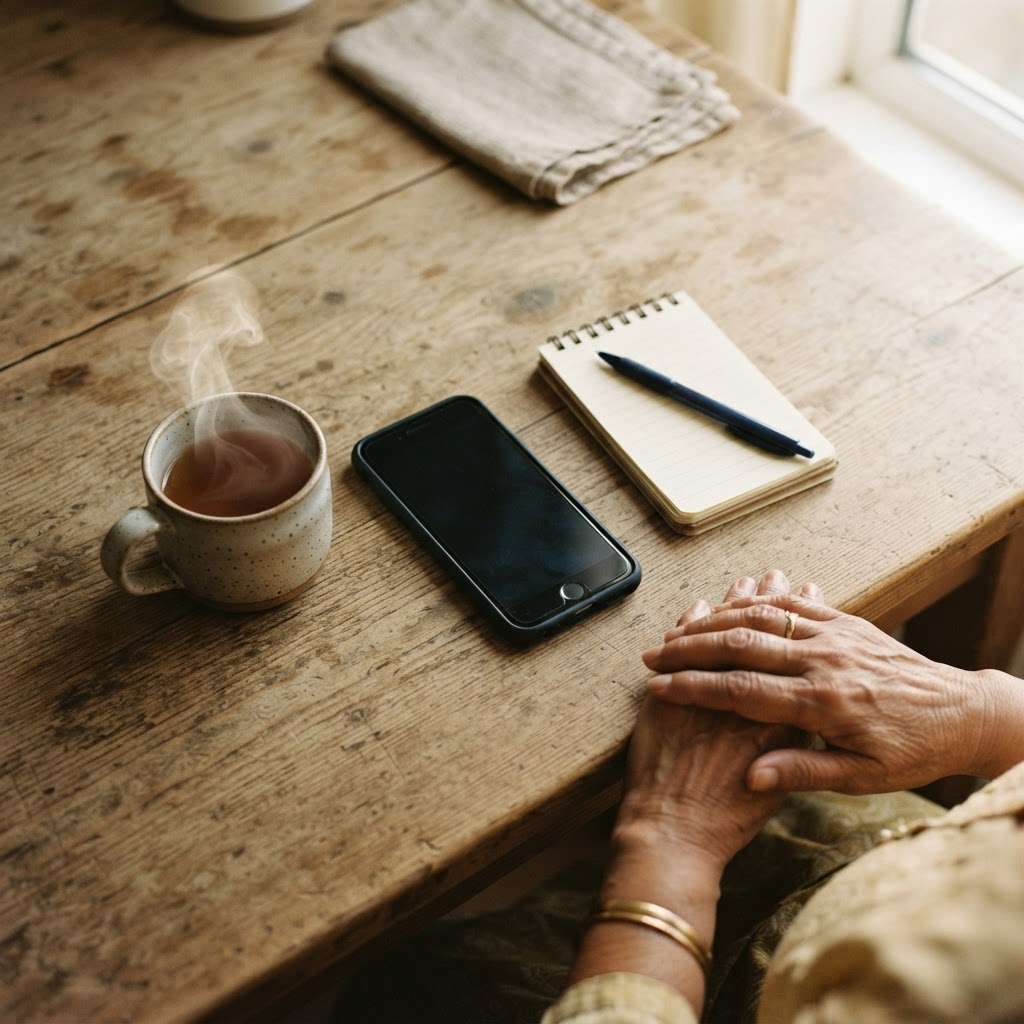
What you need in hand:
A phone, tablet, or computer with a working microphone
A quiet room - bedroom, living room, or a sheltered outdoor spot
Thirty minutes to two hours, depending on how much your parent wants to share
A plan to back up the file the same day - email it to yourself, or upload to cloud storage
What not to do: don't ask your parent to translate as they speak. Let them tell the story in the language that feels like home. Translation is a separate step, and doing both at once flattens the story into neither language well.
How to record your parents' stories in their native language
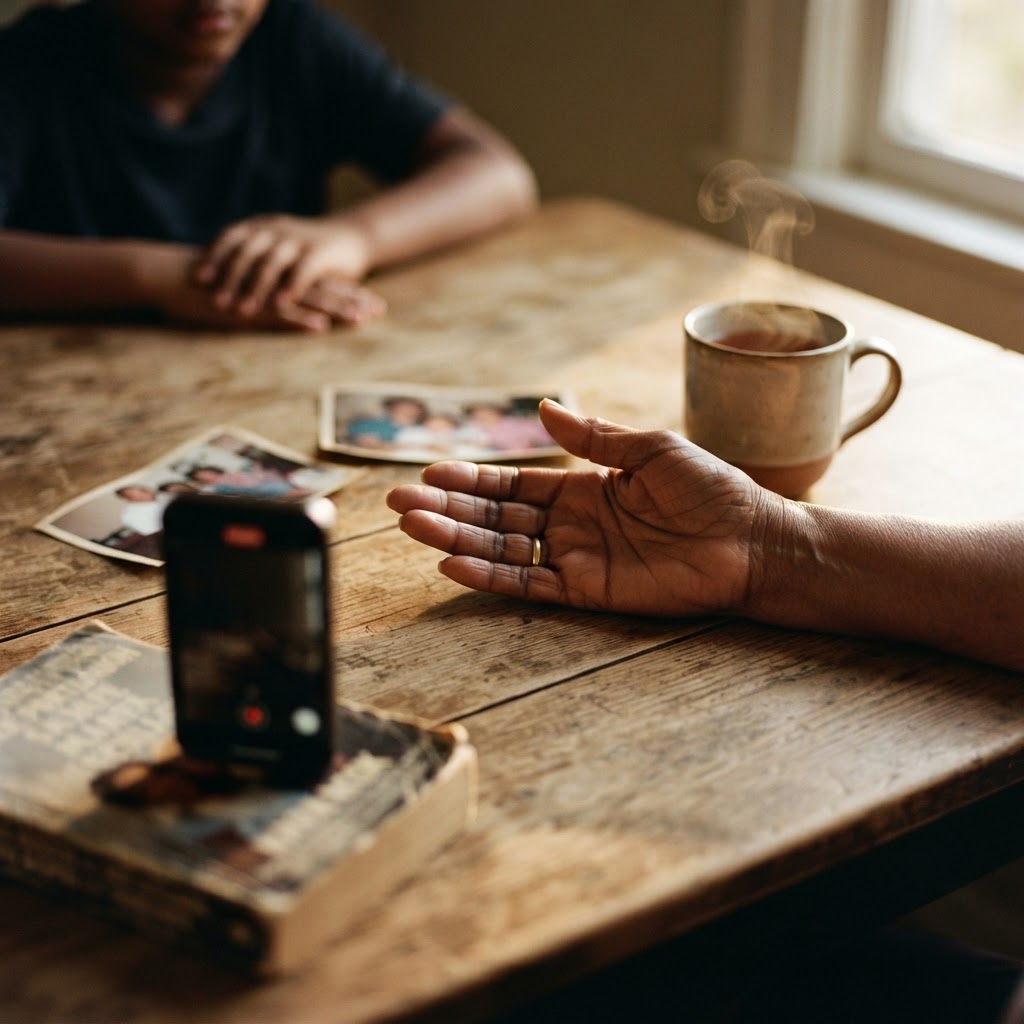
Ask your parent what story they most want their grandchildren to know. Give them a few days to think before you press record. Anxiety drops when people have had time to remember. Suggest a category if it helps - a childhood memory, how they met, the journey that brought them here, something they want to pass on.
Set up in five minutes: close the windows, turn off the fan, silence your phone. Prop the recording device at chest height on a book or pillow. Record ten seconds of yourself speaking and play it back. If you can hear your voice clearly, you are ready.
When you start, say something simple: "I'm recording this so [grandchild's name] can hear your voice and your stories. Tell me about [the story they chose]." Then go quiet. Your job is to witness, not to interview. If the story stalls, ask: "Who else was there?" or "What did it smell like?" or "What happened next?" If your parent is flowing, do not interrupt. If they want to stop, stop. One story is enough. A few minutes of their voice is a gift. If you find yourself struggling to keep the conversation going, the techniques in how to ask a good follow-up question can help you draw out more without interrupting the flow.
Emotion in the recording is not a mistake. If your parent cries, or laughs, or trails off because the memory is too large for words - keep recording. The grandchildren will hear not just the story but the weight and love behind it. That is the part that cannot be translated.
What to do after the recording
Back up the file before you put your phone down. Email it to yourself and to one other family member. Upload a copy to cloud storage. Label the file with your parent's name, the language, and the date - something like Baba_Cantonese_stories_June2025. Future you, and future grandchildren, will be grateful for that label.
Then ask your parent to give you a short retelling in English - or whatever language the grandchildren will grow up in. It does not have to be the same story word for word. It can be a summary, a few sentences, the part they most want understood. Record that too, and keep both files together. The original is the one that matters most; the English version is the map that helps grandchildren find their way into it.
While the session is fresh, write down any names, places, and words that have no clean translation. Imagine your parent says a word that means something like "the homesickness for a place you can never go back to" - write it down phonetically, write what it means, write the context they used it in. These notes become the glossary that makes the recording navigable for grandchildren who were not in the room.
If you have a bilingual relative - a cousin, an aunt, a family friend - ask them to listen and add their own layer: a note explaining a cultural reference, a translation of a phrase that resists translation, a memory the recording triggers for them. They can do this as a guest without needing to manage any archive themselves.
If the audio quality is imperfect
Grandchildren will forgive background noise. What they cannot recover from is the recording that was never made because the conditions were not perfect. Save the file as it is. If the audio is genuinely muffled, try one more take in a different room - but do not delete the first version. Imperfect is not the same as useless.
Where to keep it so it lasts
Keep the original file in cloud storage and a copy in at least one other place - an external drive, a second account, a trusted family member's device. A single copy in one place is not a backup; it is a single point of failure. The same principles that apply to protecting old family photos from loss apply here: redundancy is not overcaution, it is the minimum.
If you want to organise this recording alongside photos, documents, and other family stories - and give grandchildren a way to add their own questions and memories as they grow - Glow's private family space works well for this. Note that Talk with Glow, the spoken interview feature, currently runs sittings in Hebrew or English only, so for any other language you record directly on your phone and keep the file in Glow's private family space, where you can share guest links with a bilingual relative who wants to add context. The recording itself, in whatever language it was made, lives there unchanged.
The smallest version of this plan is still worth doing: one recording, saved in two places, labelled clearly, shared with the people who will one day want it. Keep the original even if nobody in the family understands every word yet. Language skips generations and comes back. The voice does not.
Questions families ask
Should I transcribe or translate the recording?
You do not have to. The recording itself is what matters - grandchildren can hear the voice, the tone, the pauses. If you want to add a transcript or translation later, that is worth doing, but don't let it become a reason to delay recording in the first place.
What if my parent is worried about their accent or grammar?
Tell them their grandchildren want to hear them, not a news anchor. The accent is part of the story. The particular way they phrase things is how grandchildren will remember them. The imperfections are the point.
Can I record on video instead of audio?
Yes, and it is often better. Grandchildren will see your parent's face and gestures, not just hear the voice. Use the same setup - quiet space, stable surface, natural light if possible - and let them speak naturally. Keep the video file somewhere it will not be accidentally deleted.
What if my parent wants to stop partway through?
Stop. Save what you have and tell them you can come back another day. One complete story is more valuable than three unfinished ones. There is no session length you need to reach.
How do I share this with grandchildren who don't speak the language?
Share the recording itself first - they will hear the feeling even before they understand the words. Pair it with the short English retelling and the notes you wrote down about names and untranslatable phrases. That combination gives them the voice and the meaning together. Once the grandchildren are old enough, inviting them to record their own voice notes in response turns a one-way archive into a real conversation across generations.
Frequently Asked Questions
How do I record my parent's stories in their native language if I don't speak it fluently myself?
You do not need to speak the language to record it. Your job is to set up the device, press record, and listen. Ask your parent to choose the story beforehand, then let them speak. Afterward, ask a bilingual relative to help you write notes on names, places, and any phrases that need context.
What is the best way to save a family story recording so it doesn't get lost?
Save the file in at least two places the same day you record: cloud storage (such as Google Drive, iCloud, or Dropbox) and one other location such as an external drive or a trusted family member's device. Label the file with your parent's name, the language, and the date so it is easy to find years later.
Should I ask my parent to tell the story in English for grandchildren who don't speak their first language?
After recording in their first language, you can ask for a short retelling in English - a summary or the part they most want understood. Keep both recordings. The original in their native language is the one that carries the voice and feeling; the English version helps grandchildren follow the story.
How long should a family story recording session be?
Thirty minutes is a reasonable starting point, but sessions often run to an hour or two if your parent is engaged. There is no minimum. If your parent tells one complete story and wants to stop, that is enough for one day. You can always record more in a separate session.
What if my parent died before I recorded their stories?
You can still gather their stories from people who knew them - siblings, cousins, childhood friends. Ask those people to share a memory in your parent's first language if they can, or to describe things your parent used to say. Those recordings become part of the family archive even if your parent is no longer there to make them.