How to Write a Letter to a Loved One Who Died: A Gentle Guide for Any Kind of Relationship
By The Glow Editors · November 3, 2026
Category: Living With Loss

A letter to someone who has died can say thank you, say sorry, report the news or simply say their name. Ways to begin, what to do with the page afterwards, and when to put it down.
Key takeaways
The problem Many grieving people carry words they never said and do not know where to put them.
Core insight A letter does not have to be a goodbye. It can continue a conversation in any length and tone, and it is a modest aid, not a treatment.
Practical outcome You write three lines today, choose whether to keep the page, and have gentle ways to return to it.
The house has gone still for the night, and a sentence you never said keeps returning. Maybe it is thanks, maybe a grudge, maybe just that the kitchen is not the same. A letter lets that sentence leave.
There is no required shape. A single line counts, and so do pages. Afterwards you may keep it, burn it, bury it or speak it aloud. Use what helps here and let go of what does not.
Not a goodbye

People sometimes expect writing about grief to deliver closure, and we would not promise that. A volunteer for Cruse Bereavement Support Scotland explains that a death leaves the shared past intact and alters a relationship without ending it. The piece quotes the author Kate Thompson on letters as a way to continue conversations across time and space, even when the letter is never sent.
That gives you leave to skip the goodbye. A letter can be a "good morning" or an update on the day.
Two decisions before you start
Cruse Scotland suggests settling the tools and the plan first. Choose what to write on: paper, a journal, a laptop. And think about what the letter will become: kept, destroyed, read to yourself or read to a friend. The plan may change halfway, and that is allowed.
- Pen and paper is slower, and many people find the slowness private.
- A screen lets you revise and keeps everything in a single folder.
- Speaking suits those who talk more easily than they write. Use a recorder, or simply talk on a drive.
Still undecided? Write first and decide later.
What can go in it
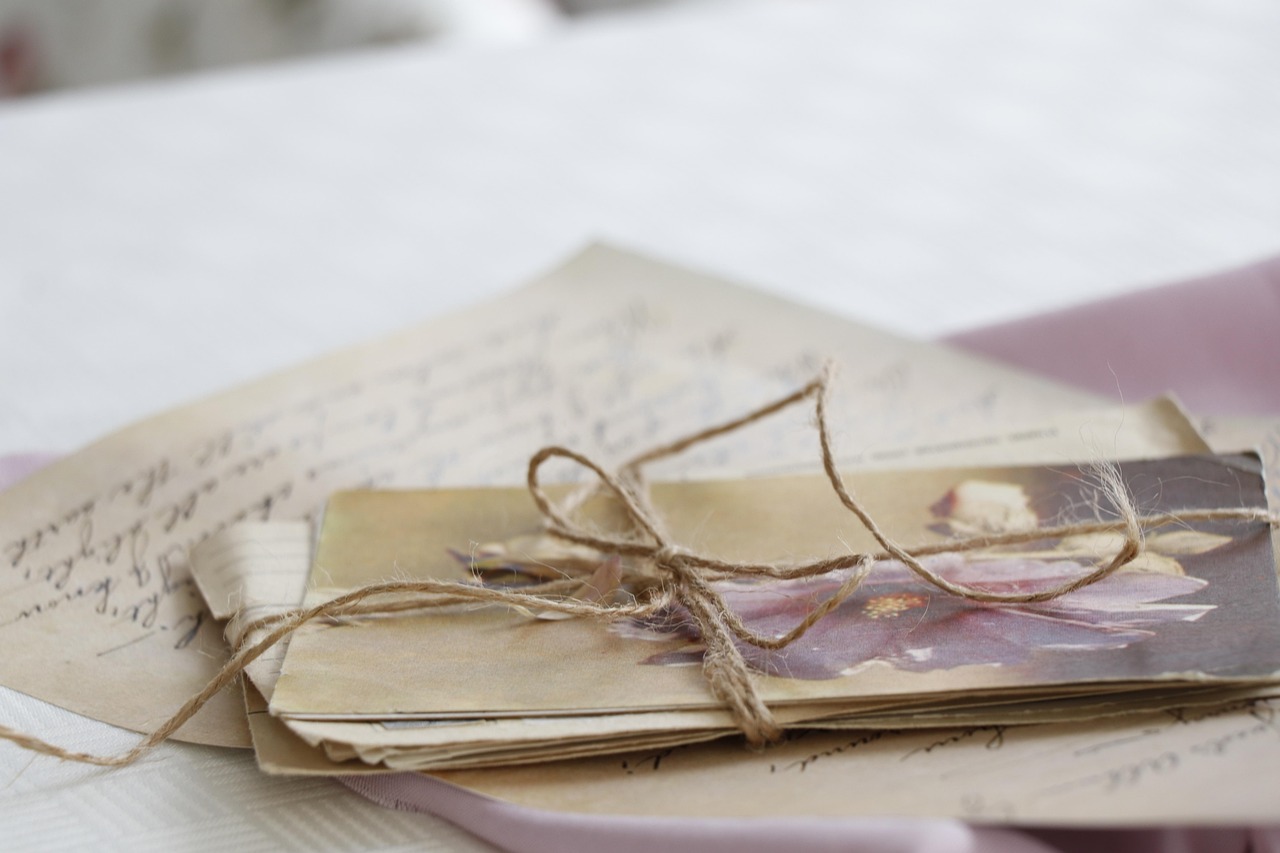
Feelings are optional. Cruse Scotland points out that a letter may just recall a memory that matters, or report news from after the death. Many letters fall into one of a few kinds.
- The update. What has changed since they died: the garden, the baby, the football result.
- The memory. One scene, told in detail, as if they might want to check it.
- The thank-you. Specific, such as the lift you were given in a snowstorm.
- The question. The one you wish you had asked, written even though there is no answer.
- The hard part. Anger, guilt or relief that had nowhere to go.
If you cannot begin, finish a sentence: "Last week something reminded me of you...", "What I never told you is...", "You would have laughed at...", "I am still cross that...".
An invented letter
This is a composite, written to show how small a letter can be. A man whose wife died in the spring writes: "Your seedlings are up. I forgot to water them for a week and heard you tutting the whole time. I wore your garden gloves to finish the row. They pinch, and I kept them on anyway." He names no emotion, and the whole marriage is in the letter.
When the relationship was hard
Love and pain often share one history. You may feel relief or guilt next to grief. A page nobody reads is a safe place for every one of those. It may refuse to forgive and refuse to explain. Or write twice, once from the anger and once from the love, since both are true. Fairness is not required.
Where, and for whom
Cruse Scotland mentions a friend who read her letter to her parents at the place they were buried, and says a significant place may be where you read or even write it. Not everyone has a grave to visit, and some graves are far away. Other places can do the work: their chair, a bench, the kitchen, the sea. In some traditions notes are left where people pray, or on a household altar. Follow your own family's customs.
What to do with the page
- Tuck it into a memory box with a photograph, or something that was theirs.
- Write a new one on each birthday or anniversary. The grief, anniversaries and holidays guide has ideas for those dates.
- Read it to relatives if it carries a memory they would treasure, after checking with anyone it mentions.
- Leave a copy somewhere the family can find. Glow, a private family space, can keep it near related photographs and recordings. It stores your words only, and never writes as them or replies on their behalf.
- Or tear it up. Some people shred the page and feel lighter, and that is a whole use of a letter.
Writing is not a treatment
Writers on grief sometimes talk as if a letter will heal. We would be more modest. Harvard Health says expressive writing may help some people cope, but is not a cure-all and will not work for everyone. It seems more helpful for those who are not also living with severe mental health difficulties. A 2025 meta-analysis of trials of expressive writing for grief reports a small benefit. I could not open the full paper, so treat that as a second-hand summary.
So write the letter because you want to say the thing, not because it must work. If writing steadily helps you, keep going, because your experience is the best evidence you have.
If it stirs too much
Writing can raise strong feelings, both during and afterwards. Should it become too much, set the letter aside and look after yourself with fresh air or a friendly voice. Anyone seeing a counsellor or attending a support group might raise the idea there first. Nothing here replaces medical or mental-health care.
When grief weighs too much, or thoughts of self-harm appear, contact someone today. US readers can use 988 by call or text, UK and Irish readers can reach Samaritans on 116 123, and in other countries findahelpline.com lists helplines near you.
Three lines to begin
Begin with the words "This morning I remembered you when", then add two more lines and put the page away. Nothing more is needed.
Frequently Asked Questions
Is it strange to write to someone who has died?
No. Grief charities describe letters as a common way to say what was left unsaid. The letter will not be answered, and the writing is for you.
Should I send the letter somewhere?
You do not need to. Some people read it aloud at a grave or place it with photographs. Others keep it private.
What if I feel worse afterwards?
That can happen. Put the letter away, drink some water and do something gentle. If the feeling does not ease, talk to someone you trust or to a professional.
Can a child write one?
You can offer. A child may prefer to draw or to dictate a few lines, and should choose whether to keep it. See how to talk to a child about death for wording by age.