How to Talk About the Past With a Parent Who Has Dementia, and Record What They Share
By The Glow Editors · September 26, 2026
Category: ask-them-now
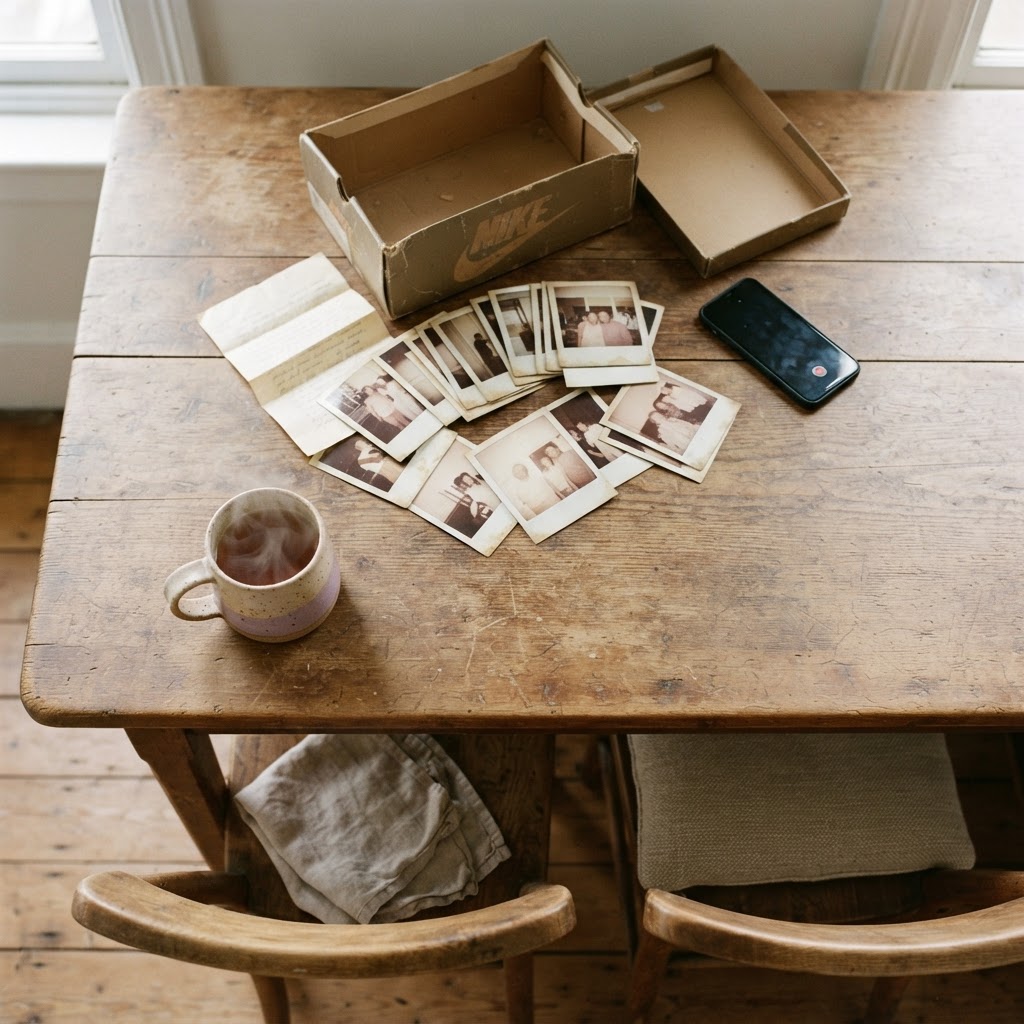
Recording stories with a parent who has dementia doesn't require a script or special equipment - just a quiet moment, one open question, and a way to save what they say.
Key takeaways
The problem Dementia makes families feel the window for recording stories has already closed - it often hasn't.
Core insight The distant past stays accessible longest; simple prompts and objects open it better than direct questions.
Practical outcome After reading, you can set up a recording, choose six prompts, and start this week with one quiet sitting.
Recording stories with a parent who has dementia asks something different of you than a regular conversation. You're not trying to fill in a family tree or get the facts straight. You're collecting their voice, their version, the things they choose to tell you - and that work matters even when the details shift.
This article is not medical advice. If you have concerns about a parent's wellbeing or care, please speak with their doctor or a dementia specialist.
Before you start: what you need to know
Before you sit down, gather a few things: a quiet room with the door closed, a phone or tablet with enough battery, and a notebook or scrap of paper nearby. That's it. You don't need a microphone stand or a production setup.
Your parent may not remember you asked last week. That's okay. Each conversation is its own thing. Repetition is part of this, not a problem to fix.
Two rules that help: don't correct them if the details shift - you're collecting their version, not fact-checking. And don't push for a full life story in one sitting. Ten or fifteen minutes is plenty - stop while it's still a good conversation.
One thing not to do: don't rely on your memory alone. Record it or write it down while you're talking. What feels vivid in the moment fades faster than you think.
The best way to record stories your parent wants to share
Use your phone's built-in voice recorder app. Press record, ask one open question, and let them talk. Save the file with a date and topic label before you close the app. That's the whole method - nothing more complicated than that.
You don't need fancy equipment or a script. You need permission, a quiet moment, and a way to save what they say.
People with dementia often hold onto stories even when they lose other details. Research on dementia and memory shows that long-term autobiographical memories - childhood, early work, formative relationships - tend to stay accessible longer than recent ones. Recording captures their voice, their phrasing, the things they choose to tell you while they can still tell them.
Step 1: Ask permission and set the tone

Sit down when they're alert and calm. Say something like: "I'd love to hear about your first job" or "Can you tell me how you met Dad?" Then hold up the phone and ask: "Is it okay if I record this so I don't forget?"
Some people with dementia worry about being recorded. Asking first - every time - shows respect and often makes them more willing to share. Don't assume last week's yes carries over.
Mornings are often better than evenings. Avoid mealtimes and moments when they're already tired. You'll learn their rhythm within a few visits.
Step 2: Start with one open question
Questions that tend to open things up: "Tell me about the house you grew up in." "What was your first job like?" "Who was your best friend when you were young?" "What's a holiday you still remember?"
Open questions let them choose what to say and how much. They're less likely to feel tested or rushed than yes-or-no questions, which can feel like a quiz.
Don't ask two questions at once. Ask one, press record, and listen. Silence is fine - let them think. The pause before an answer is often where the real memory lives.
Step 3: Listen more than you talk
Put your phone face-down except where it's recording. Make eye contact. Nod. Let them finish sentences even if it takes a while.
If they say something that doesn't match what you remember, don't interrupt. You're collecting their story, not a court record. Write down the discrepancy in your notebook afterward if it matters to you.
If they drift to a different memory, follow them. Some of the best stories come sideways - an answer about a childhood farm that turns into a story about a neighbor, then a wedding, then a food they haven't thought about in sixty years. You can always return to the original topic next time.
Step 4: Ask one follow-up question if they pause
If they stop talking, wait five seconds. Then try one of these: "What happened next?" "How did that make you feel?" "Who else was there?" "What did the place look like?" "What did you eat?" "How old were you then?"
A single follow-up often unlocks more detail without feeling like an interrogation. It tells them you're interested, not just waiting for them to finish.
If they seem tired or frustrated, stop. Sessions don't have to be long - fifteen minutes of real conversation beats forty-five minutes of strain.
Step 5: Save the recording with a clear label
Use a format like: Mom_childhood_farm_Jan15_2024. This takes thirty seconds and saves hours of confusion later when you have twenty files named "Voice Memo 47".
Date, topic, parent's name. That's all you need. You can add more detail in a separate note if you want.
Don't rely on your phone's default voice memo folder. Move the file to a folder on your computer or to cloud storage you already use within the same day. Phones get lost, reset, or break - and these files are not replaceable.
Step 6: Write down what you remember right after
While the conversation is fresh, jot down: the main story they told, any names or dates they mentioned, and one detail that surprised you or made you laugh. This takes five minutes and saves something the recording can't - the expression on their face, a laugh, the way they waved their hand to describe a room.
You'll listen to the recording later. These notes help you find the moment you want to hear again.
Your notes don't have to be neat or complete. They're for you, not anyone else.
If they don't remember you asked before
People with dementia may not recall that you recorded them last week. That's not a reason to stop. Ask again. They may tell you the same story or a different one - both are worth having.
Hearing the same story multiple times, in their voice, is actually a gift. You get to know what matters most to them: the story that keeps coming back is usually the one that shaped them.
If they seem confused about why you're recording, you can say: "I just want to remember the things you tell me. Is that okay?" Most people say yes.
If they refuse to be recorded
Some people feel uncomfortable on tape, even when they're happy to talk. Don't push. Write down what they say instead, as close to their words as you can get.
You might ask: "Can I write this down so I remember?" Many people who won't be recorded are fine with notes. A handwritten page in your notebook is still something - it's still their story.
Comfort level can shift. Ask again in a few weeks. Sometimes a different device - a tablet instead of a phone - feels less formal and less threatening.
If they get upset or confused during the conversation
Stop recording immediately. Say something calm and grounding: "That sounds hard. We don't have to talk about that today." Move toward the present - comment on something in the room, offer a drink of water, put on familiar music.
Dementia can make emotions feel very immediate and raw. A painful memory from sixty years ago can land as if it happened this morning. It's not your fault, and it's not a sign you did something wrong.
Once they're calm, you can ask if they'd like to talk about something else, or if they'd rather stop for the day. There's no pressure to continue. You can always come back tomorrow.
Where to keep the recordings once they're safe
Move files from your phone to your computer or to cloud storage you already use within twenty-four hours. This protects them if your phone is lost, stolen, or wiped.
A folder structure that works: [Parent's name] then [Year] then [Topic]. Or sort chronologically if you prefer. Pick one system and stick with it - the point is being able to find a recording six years from now without opening every file.
If you're gathering photos, letters, and other memories alongside these recordings, Glow lets you organize everything in one place - sorted by date, topic, or person - so the recordings don't end up isolated on a hard drive nobody opens. Glow also has a gentle-mode interview feature that can prompt conversation with your parent directly, which some families find less pressure than a blank recording session.
Start with what you have. A folder on your desktop, a notebook from the drugstore, your phone's built-in recorder. The right moment to begin is the next time you're sitting together and they seem like themselves. That might be tomorrow morning.
Questions families ask about recording stories
Is it legal to record my parent without written consent?
In most places, recording someone in a private conversation requires their consent. Asking permission - which we covered in Step 1 - is both the ethical and the legal move. Recording consent laws vary by country and state, but the simple rule is: ask, and you're safe. Written consent is rarely required for a family conversation, but verbal consent captured at the start of the recording is a clean record.
What if the audio is hard to hear or they mumble?
This happens. Hearing loss, background noise, or quieter speech can make recordings hard to follow - but that doesn't make them less worth keeping. Sit closer to the phone's microphone, reduce background noise where you can, and ask them to speak up gently if needed. A dedicated voice recorder often picks up speech better than a phone in a noisy room.
What if I get emotional listening to the recordings?
Hearing your parent's voice, especially as dementia progresses, can be overwhelming. That's normal and real. You don't have to listen to all of them at once. Listen to one, take a break, come back later. You can also listen with someone else - a sibling, a friend - if that makes it easier to bear.
How often should I record? Is once a month enough?
There's no right frequency. Once a month, once a week, once every few months - all of it counts. Do what fits your life and your parent's energy. You're not trying to capture everything. You're collecting moments, and even one good conversation a year is worth having.
Should I tell my siblings I'm recording, or keep it private?
Telling siblings often leads to more recordings and a shared archive nobody has to manage alone. You might say: "I've been recording Mom's stories - would you like copies, or would you want to do some sessions yourself?" If family dynamics make that complicated, you can keep your recordings private. But consider asking one trusted sibling first - they may want in more than you expect.
Frequently Asked Questions
Is it legal to record my parent without written consent?
In most places, recording a private conversation requires the other person's consent. Asking permission before you press record - and getting a verbal yes - is both the ethical and legal approach. Recording consent laws vary by country and state, so if you're unsure, check your local rules. But asking clearly at the start of each session keeps you on solid ground.
What if the audio is hard to hear or my parent mumbles?
This is common and doesn't make the recording less worth keeping. Sit closer to the phone's microphone, reduce background noise where you can, and gently ask them to speak up if needed. A dedicated voice recorder often picks up quieter speech better than a phone. Even a partially audible recording preserves their voice and phrasing.
What if I get emotional listening to recordings of my parent with dementia?
Hearing your parent's voice as dementia progresses can be genuinely hard to sit with. You don't have to listen to everything at once. Try one recording, take a break, and come back when you're ready. Listening with a sibling or a trusted friend can make it easier to hold.
How often should I record stories with a parent who has dementia?
There's no required frequency. Once a month, once a week, or a handful of times a year - all of it counts. Match the rhythm to your parent's energy and your own capacity. You're not trying to document everything; you're collecting moments, and one good conversation has real value.