A Bar or Bat Mitzvah Gift From the Grandparents: Their Stories, in Their Own Voices
By The Glow Editors · September 25, 2026
Category: ask-them-now
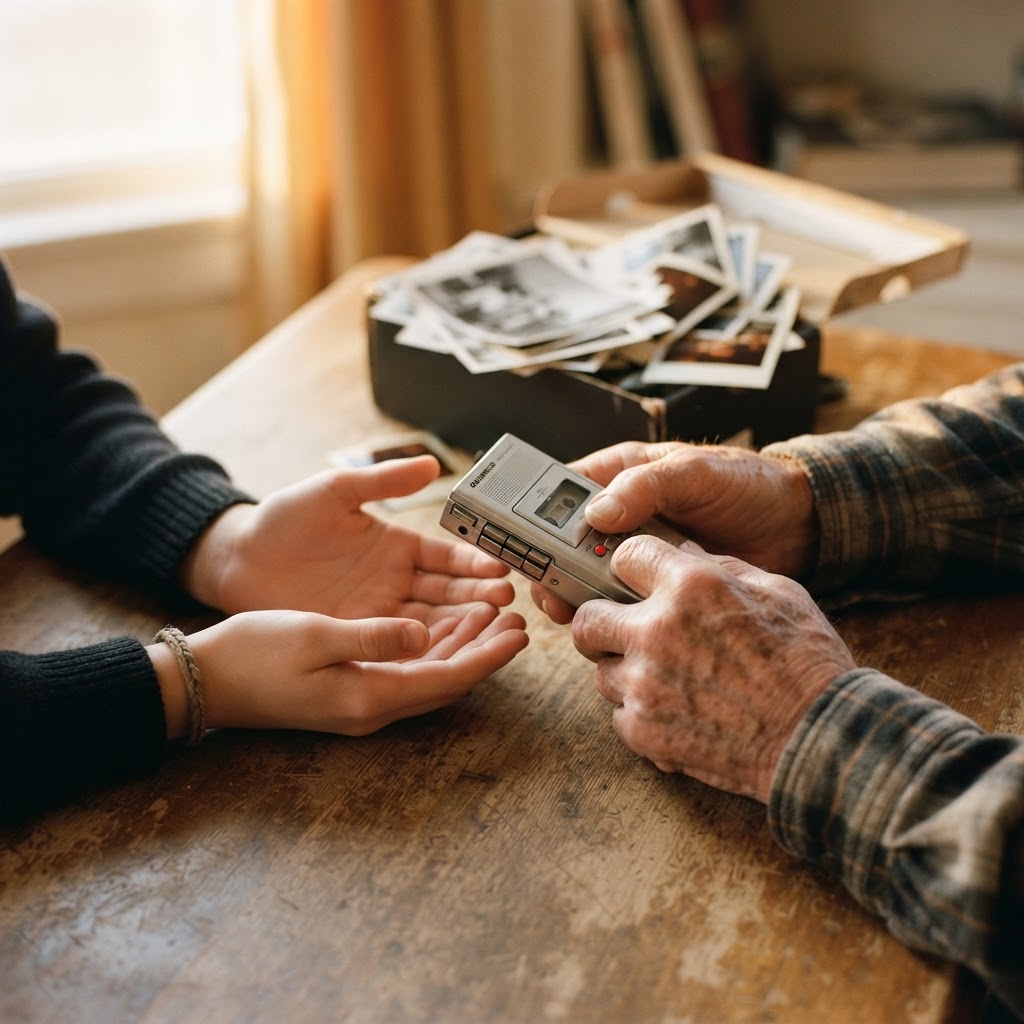
One of the most meaningful bar or bat mitzvah gift ideas from grandparents costs nothing: their own stories, recorded in their own voices. Here's when to start, what to ask, and how to share it on the day.
Her bat mitzvah was in 1967, in a shul that no longer exists, in a city your grandmother left before your mother was born. She has mentioned it exactly once, in passing, at a Passover seder. If nobody sits down with her before the party, that story stays in 1967.
This is a guide for the parent, aunt, uncle, or older cousin who wants to give the bar or bat mitzvah child something the party planner cannot order: their grandparents' stories, in their grandparents' own voices. It takes one quiet afternoon, a phone, and the right questions.
Start a few months before the mitzvah - not the week before, when everything is noise. Give the conversation room to breathe, and give yourself time to do something with what you record.
How to make the conversation easy
Pick a quiet room on an ordinary afternoon. Not a holiday kitchen mid-meal, not a Friday night with cousins arriving at the door. A kitchen table on a Tuesday, two mugs of tea, no time pressure. One person asking questions works better than a group - grandparents tend to perform for an audience and remember for a single listener.
Bring three things: your phone or a small recorder, a notebook to jot follow-up prompts, and an old photograph. A photo from their 20s or 30s is the best conversation-starter we know of. Something about holding a picture of their younger self unlocks stories that no question can reach directly. Put it on the table before you press record.
Recording matters because their voice saying these things is the gift itself. A transcript is useful, but the sound of your grandfather's laugh when he remembers something he hasn't thought about in forty years - that is what your grandchild will want to hear at 30, at 50, at 70. Tell the grandparent that plainly. Most people feel less self-conscious when they understand what the recording is actually for.
It will feel slightly formal at first. That is normal. Start with the photograph, ask something easy and concrete, and within ten minutes most people have forgotten the phone is on the table.
One note on timing: record this before the mitzvah, not after. In the weeks before the event, most grandparents are already thinking about the child, about their own childhood, about what they want to say. That feeling is exactly what you want to catch. After the party it dissipates quickly.
For grandparents who live far away, a video call works well. Frame them well (eye level, good light from a window), use a quiet room on both ends, and record the call with a tool like Zoom's built-in recording or a screen-capture app. The slight distance can actually make some people more relaxed - they are talking to a familiar face on a screen, not performing for a room.
For bilingual families where the grandparent is more comfortable in Hebrew, Yiddish, Russian, or another language: record in the language that feels most natural to them. A recording in accented, hesitant English will carry less of who they are than one in the language they dream in. You can always add a translation later. The voice is what matters.
Questions about their childhood and the house they grew up in
These questions move from the concrete - a room, a smell, a street - toward the emotional. Start at the surface and follow wherever the story goes.
Tell me about the house or apartment you grew up in. What did it smell like? What sounds did you fall asleep to?
What room do you remember most clearly, and what happened there?
Who were your neighbors? Did you ever get into trouble with them, or were they more like family?
What did you do after school? What were you not supposed to do after school?
What was the hardest year of your childhood - not necessarily a dramatic event, just a year that felt heavy?
What was the biggest change your family went through when you were young? How did your parents handle it?
What did you want to be when you were [the mitzvah child's age]? Did anyone take that seriously?
Was there somewhere you went to feel like yourself - a park, a library, a corner of the house?
What's something you ate every week growing up that you still think about?
What did you miss most about childhood once you left it behind?
Is there someone from that time - a teacher, a neighbor, a friend - you wish you'd stayed in touch with? What do you think they'd say about who you turned out to be?
Questions about love, friendship, and the people who shaped them
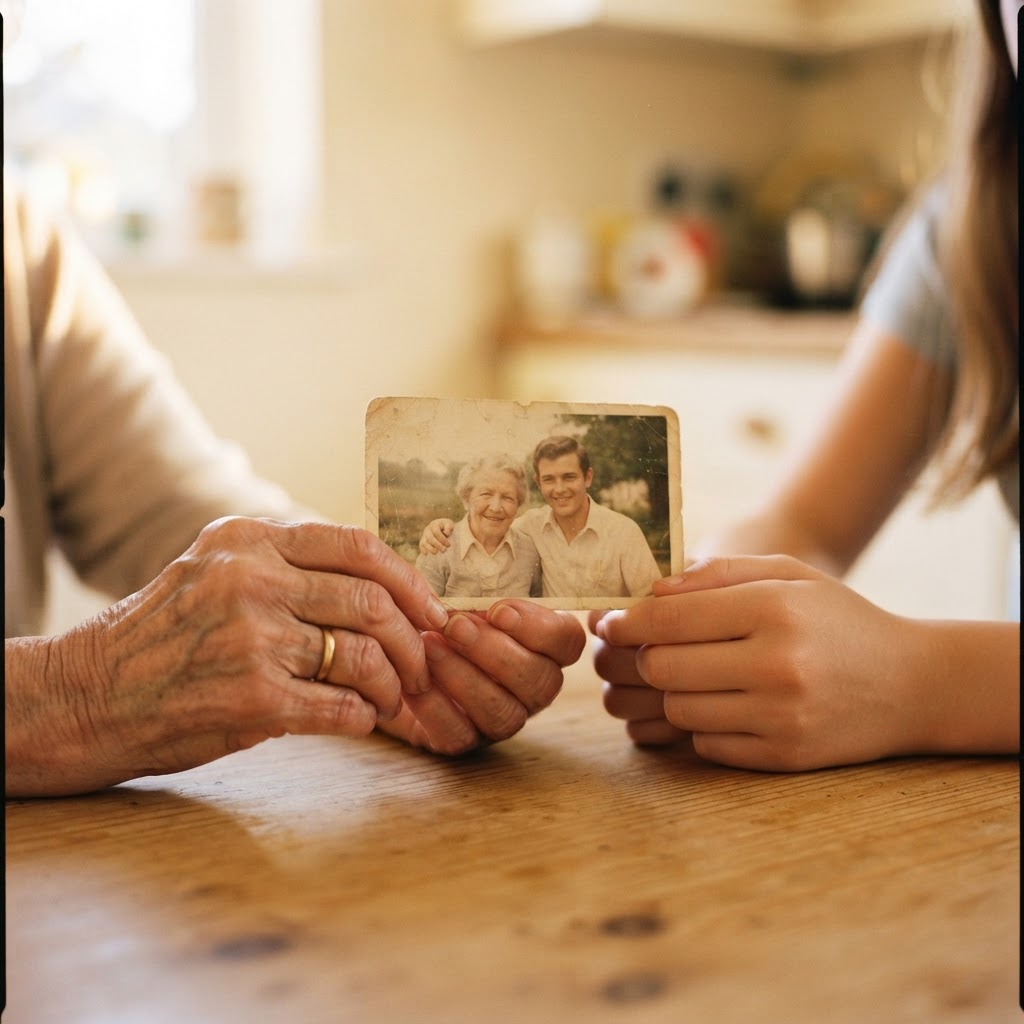
These questions often surface the values your grandparent has never said out loud in quite this way. Give them time. Don't fill the silence.
Who was your best friend when you were [the mitzvah child's age]? What did you two do together?
How did you meet [their spouse or partner]? What did you notice first?
What's something your [spouse/partner] did early on that made you think, this is the person?
Who was the most important adult in your life outside your parents - a teacher, a rabbi, an uncle, a neighbor?
Was there someone who believed in you before you believed in yourself? What did they see that you couldn't?
Who told you something you didn't want to hear, but they were right?
Have you ever had a friendship fall apart? What did you learn from that?
Is there a friendship you've kept for more than thirty years? What has kept it going?
What's the most important thing you've learned about being a good partner or spouse?
What do you hope [mitzvah child's name] learns about friendship and love by watching you?
Questions about work, money, and the choices they'd make again
Some grandparents open up about work in ways they never have with their own children. These questions are worth asking even if you think you already know the answers.
Tell me about the first time you earned your own money. What was the job, and what did you do with what you made?
What's the most ridiculous job you ever had, or the strangest boss?
Was there a moment when you had to choose between something safe and something that felt right? What did you choose?
Was there a job or opportunity you turned down? Do you still wonder about it?
What's something you tried that didn't work out? What did you do next?
What mattered more to you over your life - money or time? How did that shape the decisions you made?
What's a work decision you made that you'd make differently if you had the chance?
What did you want your children to understand about work that you're not sure they ever got?
If you could go back and learn one thing earlier in your career, what would it be?
Is there something about how you worked or built your life that you hope [mitzvah child's name] carries forward?
Questions about what the mitzvah means to them
These four questions connect the grandparent's own coming-of-age to the child's moment. They often surface the most unexpected and moving answers in the whole conversation.
What was your own bar or bat mitzvah like? Where was it, who was there, and what do you remember feeling that day?
What's different about growing up Jewish now compared to when you were [mitzvah child's age]? What feels like it's stayed the same?
What are you most proud of when you think about [mitzvah child's name] stepping into this moment?
Is there anything you want to say directly to [mitzvah child's name] - something you haven't found the right moment to say?
That last question is where the gift lives. Give the grandparent time. If they get emotional, let them. Don't move on too quickly.
Questions about what they want remembered
Save these for the end of the conversation, when the grandparent has relaxed into it. They require a little more trust.
What are you most proud of in your life? Not an achievement - a choice, or a way you showed up for someone.
What do you want your grandchildren to know about you that they probably don't?
What's something you've always stood up for, even when it cost you something?
What family story or tradition do you hope doesn't get lost?
Is there something you learned from your own grandparents that you've passed down without even realizing it?
What's a moment in your life you wish you could go back to - not to change it, just to feel it again?
What do you believe matters most in life? Not what you were told - what you've come to believe yourself?
If we made a movie about your life, what would the title be?
What to do with the answers
Save the audio file the moment the conversation ends - to your phone's camera roll, to a cloud folder, to both. Files disappear when phones are replaced or accounts lapse. Make at least two copies that live in different places on the day you record.
Create a folder on your computer called something simple - your grandparent's name, and the word "stories." Drop the audio file there. Share the folder link with one or two other family members so the recording isn't only in your hands.
If you want a transcript, you can type it out by hand while you listen - slower, but you catch every word - or use a transcription tool like Otter.ai, which handles English well and is free for short recordings. For Hebrew or other languages, a family member who speaks the language fluently will do a better job than any automated tool right now.
For the mitzvah itself: a two-minute clip played during the reception, introduced simply ("We recorded Grandma telling us about her own bat mitzvah - here's what she said"), is often one of the moments people remember most from the day. You don't need a video production. A phone propped against a glass, audio playing through a speaker - that's enough.
If you'd rather keep it private, print the transcript and slip it into the child's memory box, or send the audio file to them a week after the mitzvah with a note that says it's for them to keep.
Glow's Talk with Glow feature lets grandparents answer questions about their life out loud, in Hebrew or English, and saves every answer as a recording the family can return to. If recording a live conversation feels awkward for your grandparent, that's another way in.
And if your grandparent is no longer here: ask their siblings, their closest friends, or your other grandparent to answer these same questions. The story of who your grandparent was lives in the people who loved them. It's worth asking.
Frequently Asked Questions
When should we record the grandparents before a bar or bat mitzvah?
Aim for two to four months before the date. The grandparent is already thinking about the child and the milestone, which makes the conversation richer. Recording the week before the event, when schedules are full and emotions are running high, is harder for everyone.
What equipment do we need to record a grandparent's stories?
A smartphone is enough. Place it on the table between you, open the voice memo or camera app, and press record. For video calls with grandparents who live far away, Zoom's built-in recording function works well. The most important factor is a quiet room - not the quality of the microphone.
What if the grandparent speaks Hebrew, Yiddish, or another language at home?
Record in the language that comes most naturally to them. A conversation in their first language will carry more of who they are than a careful, slightly formal one in English. You can add a written translation later, or have a family member transcribe it. The voice recording itself is what the child will treasure.